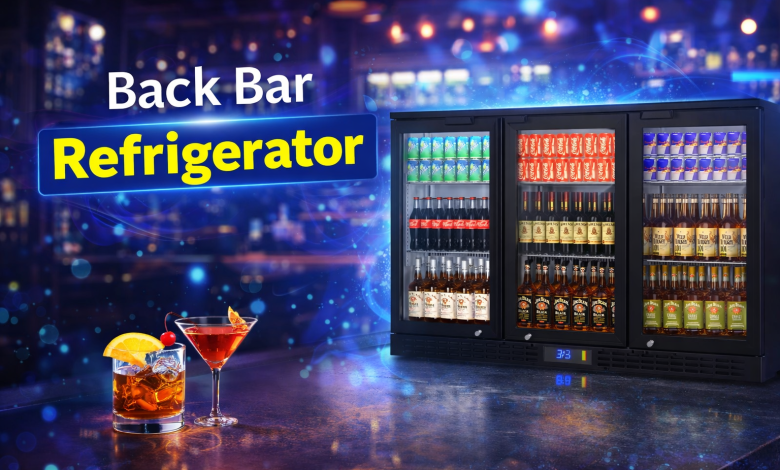
Choosing the right back bar refrigerator is one of the smartest investments a bar owner can make. The correct unit keeps drinks at ideal serving temperature, speeds service, showcases products, and stands up to the heavy-duty demands of a busy service line — while keeping energy and maintenance costs under control. This guide walks you through everything you should consider (space, capacity, door type, refrigeration tech, energy, maintenance, and warranty) and highlights real back bar refrigerator models available on The HorecaStore so you can compare options and buy with confidence.
Quick checklist — what to decide before you shop
- Exact space (width, depth, height) and clearance for ventilation.
- Daily beverage volume (how many bottles/cans/kegs you need on hand).
- Preferred door style: solid, glass, sliding, or swing.
- Countertop needs (stainless worktop vs. built-in bar top).
- Temperature range and control precision.
- Energy efficiency & refrigerant type (R-290 is common now).
- Serviceability, warranty length and local parts support.
- Budget (initial cost + operating cost).
Keep this checklist visible while you review models — it will save you from buying a unit that “looks right” but doesn’t fit your workflow.
What is a back bar refrigerator and why it matters
A back bar refrigerator (aka back bar cooler) is a low, wide refrigeration unit placed behind the bar to store and display bottled and canned drinks, mixers, and sometimes kegs. Unlike undercounter units used in kitchens, back bar refrigerators are built for high-volume beverage storage and easy access during service. They may have glass doors for display or solid doors for concealed storage and may include stainless steel tops to provide a working surface. Commercial-grade units use more robust compressors, thicker insulation, and serviceable components designed for continuous use.
Types of back bar refrigerators — which style fits your bar?
- Glass-door back bar refrigerators
Best for showcasing bottled beer, craft sodas, and high-margin drinks. Glass doors help impulse sales and make it quick for staff to locate items. Many glass-door units include interior LED lighting to enhance visibility. Example models and sizes range from two-door 59″ units to three-door or four-door wide units for high-volume bars.
- Solid-door back bar refrigerators
Offer better insulation and sometimes a lower price point. Use these when display isn’t important or when you want a cleaner, less cluttered backbar. They’re also good if you need a unit that’s easier to keep at stable temperatures for perishables.
- Sliding-door vs. swing-door
- Sliding glass doors are space-efficient and often used where staff move quickly behind the bar.
- Swing doors are more common in heavy-duty units and can open wider for fast access. Choose based on aisle/clearance and staff preference.
- Counter-height or worktop back bar refrigerators
Many back bars have a stainless steel top that doubles as a prep or staging area; some models include durable countertops designed for heavy use.
Capacity & sizing: how to match cubic feet to your service volume
Capacity is the single most important functional spec. Think in terms of daily service peaks, not average usage. Estimate the number of cans/bottles and kegs you need during your busiest period, then add a 20–30% buffer. Common sizes:
- Small (20–40 cu ft): suited for low-volume bars or cocktail stations.
- Medium (40–70 cu ft): neighborhood bars with steady traffic.
- Large (70+ cu ft): high-volume pubs, hotel bars, and venues.
Product pages list capacities in cu.ft. and typical pack equivalents (e.g., “holds 88 six-packs”). Use those to do a quick conversion: if your busiest night requires 200 cans, pick a unit with capacity comfortably above that. Example: the True 59″ back bar offers around 20.9 cu.ft. and lists beverage equivalents to help planning.
Temperature control & refrigeration technology
- Temperature range: Most back bar fridges maintain 33–38°F, which is ideal for beer and soft drinks. If you plan to store mixers or prepared garnishes, check for units with tighter control or multi-zone capability.
- Compressor type: Side-mounted compressors are common in back bar units to maximize usable interior space and ease maintenance.
- Refrigerants: Newer units use eco-friendlier refrigerants like R-290 (propane) which deliver better efficiency — important for long-term operating cost. Product specifications will list refrigerant type.
Decoding Cooler Capacity: How Many Drinks Do You Actually Need to Hold?
With your door style decided, the next logical step is to figure out just how much it needs to hold. Answering the question, “what size back bar cooler do I need?” can be simplified with a quick calculation. Think about your two busiest hours on a Friday night. The number of bottles and cans you sell during that peak rush is the absolute minimum capacity you should aim for. This ensures your bartenders aren’t constantly leaving the service area to restock, keeping the drinks and the profits flowing without interruption.
Now, don’t get sidetracked by the “cubic feet” measurement you see on spec sheets. While it tells you the total empty volume, it doesn’t tell you how many items you can actually fit inside. A better, more practical metric is the manufacturer’s can or bottle capacity rating. This translates the abstract space into real-world inventory. When you see a high capacity bar refrigerator, always look for the number of standard 12 oz. cans or longneck bottles it can hold, as this gives you a much clearer picture of its utility behind your bar. The conversation changes completely if you plan on serving draft beer. For that, a standard bottle cooler won’t do; you’ll need a specialized unit called a kegerator. The difference in the kegerator vs back bar cooler debate is purpose: a back bar cooler is a generalist for cans and bottles, while a kegerator is a specialist built specifically to hold one or more kegs and includes the necessary hoses and taps for direct-draw service. It’s an all-in-one draft system designed to pour the perfect pint.
Ultimately, choosing the right capacity is a balance between your sales volume, the types of products you sell, and having a bit of extra room for new inventory. Once you’ve settled on a cooler size that can handle your busiest nights, you need to make sure it can operate properly in its designated spot. A powerful cooler is useless if it overheats, which brings us to one of the most critical technical choices you’ll make.
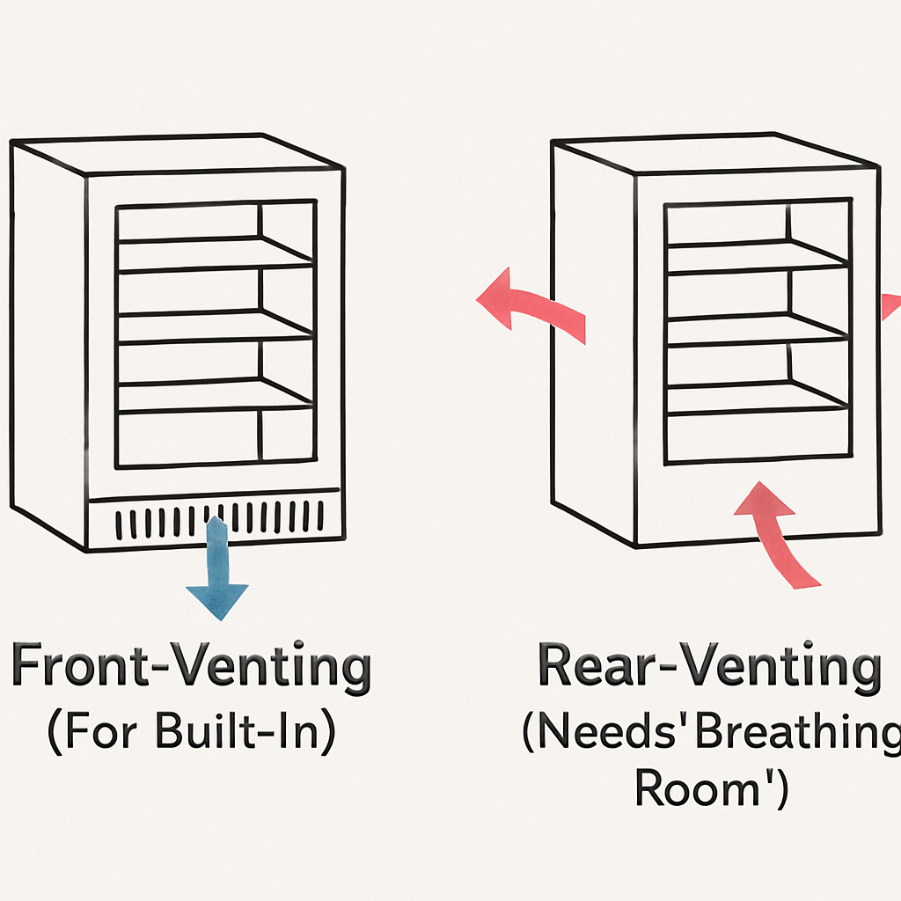
The Most Important Feature You Can’t See: Choosing Front vs. Rear Ventilation
You can have the perfect size cooler, but if it can’t breathe, it will quickly overheat and fail. This brings us to the most critical technical decision you’ll make: ventilation. If you plan to slide the cooler snugly under a counter or build it into your cabinetry for a seamless look, you have only one choice: a front-venting unit. These models act like a car engine, pulling in cool air and pushing out hot air through a grille on the front, allowing them to operate safely with zero clearance on the back and sides. This is non-negotiable for a true built-in installation.
On the other hand, if the cooler will be freestanding with space around it, a rear-venting model is a perfectly good, and often more affordable, option. These units need a few inches of “breathing room” on the sides and back to dissipate heat properly. Forcing a rear-venting cooler into a tight, enclosed space is a recipe for disaster; it’s like asking a marathon runner to sprint while wearing a winter coat. The unit will constantly struggle, driving up your energy bill and leading to premature component failure.
Finally, think about where the cooler’s “engine,” the compressor, is located. A bottom-mounted compressor is common and makes sense in a hot bar, as it pulls in cooler air from the floor. The trade-off is that it also sucks in more dust and debris, requiring more frequent cleaning. In contrast, a top-mounted compressor stays cleaner and is often better for kitchens with flour dust, but it may have to work harder in a hot environment as heat rises. Consider your bar’s conditions to decide which is the lesser hassle for you.
Recommended back bar refrigerators available on The HorecaStore
Below are several solid options from The HorecaStore you can consider — a mix of sizes and styles for different bar types. Each listing includes the product’s key strengths and what type of bar it suits best.
1. True 59″ Back Bar Refrigerator — 2 Glass Doors (TBB-2G)
Why consider it: True is a trusted commercial brand; the 59″ model balances capacity and serviceability with LED lighting and a robust compressor. Great for medium-volume bars that want an attractive display and dependable cooling.
Best for: Neighborhood bars and hotel lounges where display matters.
2. True 90″ Back Bar Refrigerator — 3 Glass Doors (TBB-4G or TBB-3G depending on configuration)
Why consider it: High capacity for busy venues, multiple doors for organized sections (beer, mixers, specials). Ideal for high-volume service where downtime must be minimized.
Best for: High-volume pubs, stadium clubs, or hotel bars.
3. Migali 48″ & 60″ Glass Door Back Bar Refrigerators (C-BB48G-HC / C-BB60G-HC)
Why consider it: Attractive mid-range options with glass doors and commercial-grade compressors. Migali models are a solid balance between price and capability. Available in 48″ and 60″ widths to fit varying backbar spaces.
Best for: Bars needing mid-sized display units without the premium True price tag.
4. Arctic Air 72″ Triple-Glass Door Back Bar (ABB72G)
Why consider it: Large 72″ display unit with three glass doors — excellent capacity and display area with a stainless top for work surface. A good choice when you need lots of visible stock and a durable countertop.
Best for: High-traffic bars and venues with high product turnover.
How to compare product specs — a simple method
Create a comparison table with these fields for each shortlisted model:
- Width / Depth / Height
- Internal capacity (cu. ft.) and pack equivalents
- Door type & count (glass/solid, sliding/swing)
- Temperature range & control type
- Compressor location & refrigerant
- Energy / wattage or amps required
- Warranty (compressor & parts)
- Front-vented or rear-vented (installation requirement)
- Price (unit + shipping + installation)
Compare at least three models side-by-side using this matrix to see trade-offs clearly.
Resources & where to buy
Start your search and compare models (specs, price, and delivery options) on The HorecaStore (TheHorecaStore.com). They list a wide range of back bar refrigerators including True, Migali, Arctic Air, and others with detailed specs to help choose the best fit for your bar.
Your Final 5-Point Checklist for a Confident Purchase
Before adding a cooler to your cart, run through this final 5-point check. It turns an overwhelming decision into a series of simple questions, ensuring you make a purchase you won’t regret.
The 5-Point Buying Checklist:
My Space: Have I measured correctly and chosen the right ventilation type (Front or Rear)?
My Grade: Is the unit NSF-Certified for commercial use?
My Doors: Do I need Glass (to sell) or Solid (to save)?
My Capacity: Does it hold enough for my busiest night?
My Features: Have I chosen the right extras (shelves, locks) for my operation?
Once you can confidently check off each point, you’re ready to make a smart purchase. You’re not just buying a cold box; you’re investing in faster service, higher sales, and a smoother-running bar. Make a choice that works as hard as you do.
Closing thoughts
A well-chosen back bar refrigerator improves service speed, protects product quality, and can increase sales by showcasing premium items. Measure carefully, consider your peak needs, and pick the door type and capacity that align with your bar’s concept. Prioritize serviceability and warranty — a reliable compressor with a strong warranty will repay the upfront cost many times over in reduced downtime and repair bills.