A Tuesday Evening in Amsterdam
It is a Tuesday evening in a family home in Amsterdam-Noord. Two children are watching cartoons on a tablet in the living room. Their father is following a live Eredivisie football match on the Smart TV in the same room – split-screen, no arguments. Their mother, working late in the home office, has a news channel running quietly in the background on her laptop. Three screens, three different channels, all streaming simultaneously from a single IPTV subscription that costs less per month than the family’s old cable package cost per week.
This scene is no longer unusual in the Netherlands. Across the country – from the canal houses of Utrecht and the high-rises of Rotterdam to the quiet suburbs of Eindhoven and the coastal towns of Zeeland – Dutch families are quietly but decisively changing the way they consume television. Internet Protocol Television, or IPTV, has moved from a technical curiosity to a household norm in a remarkably short space of time, and the shift is reshaping not just viewing habits but the entire relationship between Dutch families and their screens.
This article explores how and why that change is happening, what it means for everyday family life in the Netherlands, and why providers like IPTV Totaal have become central to this new way of watching television.
The Problem With the Old Model
To understand why IPTV has taken hold so firmly in Dutch households, it helps to understand what it replaced. For decades, Dutch families relied on cable television packages from providers like Ziggo and KPN. These packages delivered a set bundle of channels – some useful, many not – at a fixed monthly price that steadily increased year after year. By the mid-2020s, a standard family cable package in the Netherlands routinely exceeded 60 to 80 euros per month, and that was before sports add-ons, international channel packs or premium content tiers were factored in.
The frustration was not just financial. It was structural. Cable packages were designed around broadcaster schedules, not viewer needs. Families with children who wanted access to international cartoons and kids’ channels were forced to purchase expensive add-on tiers. Sports fans who wanted to follow the Champions League, Formula 1 or international cycling events faced yet more premium charges on top of an already costly base subscription. And for the growing number of Dutch households with mixed cultural backgrounds who wanted access to channels from their countries of origin, the options were limited and expensive.
The cable model, in short, was built for a world where viewers had no alternative. IPTV arrived and changed that calculation entirely.
What IPTV Actually Means for a Dutch Family
Everything on Every Screen
The most immediate and tangible change that IPTV brings to Dutch family life is the liberation from the single television set. Traditional cable delivered its signal to one primary TV, with additional connection points requiring additional hardware and often additional fees. IPTV works entirely differently – it is software delivered over a broadband connection, and it runs on any compatible device.
For a typical Dutch family in 2026, this means the living room Smart TV, a bedroom tablet, a smartphone on the tram to Amsterdam Centraal, and a laptop at the kitchen table can all access the same subscription simultaneously. Parents no longer need to negotiate with teenagers over the remote control. Children can watch their favourite programmes on their own devices without disrupting the adults watching the evening news. This multi-screen flexibility, which cable providers have historically either not offered or charged heavily for, comes as a standard feature with modern IPTV subscriptions.
Dutch Channels Plus the World
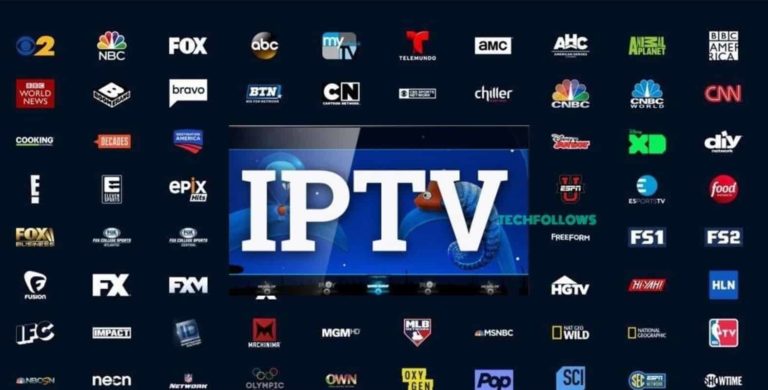
For Dutch families, comprehensive coverage of national channels is non-negotiable. NPO 1, NPO 2 and NPO 3 carry the national news, public affairs programming and cultural content that form the backbone of Dutch television viewing. RTL 4, RTL 5 and RTL 7 cover mainstream entertainment and sports. SBS 6, Net5 and Veronica round out the free-to-air landscape. A quality IPTV service delivers all of these as standard, alongside regional Dutch broadcasters and the major Flemish channels – VTM and een – that many Dutch-speaking viewers also follow regularly.
Beyond the Dutch offering, IPTV opens a window to international content that cable packages simply cannot match at a comparable price. For the many Dutch families with roots in Morocco, Turkey, Suriname, Indonesia or other countries, access to channels from their heritage cultures – news, entertainment, sport, religious programming – is not a luxury but a meaningful connection to family and identity. IPTV delivers this as part of a single subscription, without the costly international add-ons that cable providers typically charge.
Sport Without the Premium
Few things illustrate the appeal of IPTV to Dutch families more clearly than sport. The Netherlands is a nation where sport – football, cycling, Formula 1, tennis, speed skating – is not merely entertainment but a deeply ingrained part of national culture. When Max Verstappen is qualifying for a Grand Prix, when Ajax is playing in the Champions League, when the Dutch national team is competing at a major tournament, the country watches together.
Cable providers have historically treated sports coverage as a premium product, charging separate monthly fees for sports packages that many families could not easily justify. IPTV services include comprehensive sports channels – ESPN, Ziggo Sport, Sky Sports, beIN Sports, DAZN and dozens of international sports networks – within a standard subscription. For Dutch families who previously had to choose between paying extra for sport or missing key events, this alone represents a significant and immediate improvement in value.
The Technology Making It Possible
The widespread adoption of IPTV in Dutch households has been enabled by a convergence of technological factors that are particularly pronounced in the Netherlands. Chief among them is the country’s exceptional broadband infrastructure. The Netherlands consistently ranks among the top nations globally for average internet speeds, with fibre-optic connections delivering 500 Mbps to 1 Gbps to residential customers across the country. For a technology that requires a stable 10-25 Mbps connection per stream for HD and 4K quality, this national infrastructure advantage is transformative.
Device compatibility has also played a significant role. Modern IPTV services are designed to work across the full range of screens that Dutch families already own – Samsung and LG Smart TVs, Android TV boxes, Apple TV, Amazon Firestick, iOS and Android smartphones and tablets, and Windows or Mac computers. There is no specialist hardware to purchase, no installation appointment to schedule and no long-term contract to sign. The activation process – from subscription to first channel – typically takes under fifteen minutes. According to technology reviews published on Tweakers.net, the Netherlands’ most widely read consumer technology platform, ease of setup and multi-device support are consistently the most highly rated features in Dutch IPTV user reviews.
Catch-Up TV and the Electronic Programme Guide (EPG) have further cemented IPTV’s appeal for families with irregular schedules. Parents who miss the evening news because of school pickups and dinner routines can watch it an hour later. Children who are in bed before their favourite programme airs can catch it the following morning. The rigid schedule of traditional broadcasting, which structured Dutch family evenings for generations, has become optional.
Navigating the Legal Landscape
As IPTV has grown in popularity across the Netherlands, so too has Dutch consumer awareness of the legal questions surrounding it. The fundamental principle is straightforward: IPTV as a technology is entirely legal in the Netherlands and throughout the European Union. It is simply a method of delivering content over the internet. The legal distinction lies in the provider’s content licensing – services that hold valid broadcast licences for the channels they distribute operate within Dutch and EU law.
For Dutch families researching IPTV for the first time, understanding this distinction is important. The Dutch-language resource on Is IPTV Legaal in Nederland provides a thorough and accessible explanation of the current regulatory framework, covering the relevant Dutch and European legal standards in plain language. The practical guidance for consumers is consistent: choose a provider that uses transparent pricing, accepts recognised Dutch payment methods such as iDEAL, and clearly communicates its content licensing arrangements. The Consumentenbond, the Netherlands’ leading independent consumer organisation, applies these same transparency criteria when evaluating any subscription-based media service.
How Dutch Families Are Staying Informed
The IPTV market in the Netherlands is dynamic. Providers update their channel offerings, pricing structures change, new apps are released, and the regulatory environment continues to evolve. Dutch families who have made IPTV a central part of their home entertainment setup have found that staying informed about these developments makes a meaningful difference to the quality of their experience.
Dedicated Dutch-language coverage of the IPTV sector – including provider updates, new channel additions, app releases and legal developments – is available through sources like IPTV Nieuws, which tracks the latest developments relevant to viewers in the Netherlands. For Dutch families navigating a market that continues to evolve rapidly, access to locally relevant and regularly updated information helps ensure that their IPTV setup continues to deliver the value and reliability they expect.
The Generational Shift
Perhaps the most telling indicator of IPTV’s long-term trajectory in the Netherlands is the generational divide in how Dutch families relate to it. For viewers over fifty, IPTV is often a discovery – a better, cheaper alternative to cable that they arrived at through frustration with rising costs and inflexible packages. For viewers in their thirties and forties, it is an obvious choice – a natural extension of the streaming-first media habits they already apply to music, films and series. For Dutch teenagers and young adults, the question barely registers: they have never understood why their parents paid so much for cable in the first place.
This generational momentum has significant implications for the Dutch broadcasting landscape. As younger Dutch households form and establish their media setups independently for the first time, the default choice is increasingly IPTV rather than cable. The cultural weight that cable television once carried – as the reliable, familiar backbone of Dutch family evenings – is diminishing with each passing year, replaced by a more flexible, more affordable and more personally tailored alternative.
Traditional Dutch broadcasters and cable providers have not ignored this trend. Several have launched their own streaming products or entered into distribution agreements with IPTV platforms. But the structural economics of cable – the infrastructure costs, the legacy contracts, the channel bundling model – make it difficult to compete on price and flexibility with providers that were built from the ground up for internet delivery. The transition, once begun, has a momentum of its own.
Frequently Asked Questions
How much does a typical IPTV subscription cost for a Dutch family?
Pricing varies by provider and package, but Dutch IPTV subscriptions are typically available at a fraction of the cost of an equivalent cable package. Many providers offer flexible monthly plans without long-term contracts, as well as discounted rates for longer subscription periods. The value advantage over traditional cable is significant, particularly when sports and international channel packages are factored in.
Can the whole family use IPTV on different devices at the same time?
Yes. Most reputable IPTV providers support simultaneous streaming on multiple devices – typically three to five screens at the same time under a single subscription. This makes IPTV particularly well-suited to family households where different members want to watch different content on different devices simultaneously.
What happens if our internet connection goes down?
IPTV requires an active internet connection to stream content. During an outage, live streaming would be unavailable – the same limitation that applies to any internet-dependent service, including Netflix or YouTube. For Dutch households with fibre-optic connections, outages are relatively rare and typically brief. Some providers also offer downloadable content through their on-demand libraries, which can be accessed offline.
Is IPTV suitable for elderly family members who are less familiar with technology?
Modern IPTV apps have improved significantly in terms of usability and are now generally accessible to viewers of all ages. On a Smart TV, the interface is navigated with a standard remote control and is designed to feel familiar to anyone accustomed to traditional television. Many Dutch IPTV providers also offer Dutch-language customer support to assist with setup and any questions that arise – an important consideration for family members who may need guidance.
Can we access Dutch channels while on holiday abroad?
Yes. IPTV subscriptions are delivered over the internet and function wherever a stable connection is available. Dutch families on holiday in Spain, France, Germany or further afield can continue watching all their usual Dutch and international channels without interruption. Some providers include an integrated VPN as part of their subscription, which also adds an additional layer of security when streaming on public Wi-Fi networks.
Conclusion: A New Normal for Dutch Households
The shift from cable to IPTV in Dutch family homes is not a trend or a niche phenomenon. It is a structural change in how an entire society consumes television – driven by economics, enabled by world-class infrastructure, and accelerated by a generation that has grown up with on-demand, multi-device digital media as the default.
For Dutch families, the practical benefits are clear and immediate: lower costs, more channels, multi-screen flexibility, comprehensive sports coverage and the freedom to watch what they want, when they want, on whichever device is to hand. For the broader Dutch media landscape, the implications are more complex and still unfolding – but the direction of travel is unmistakable.
The family in Amsterdam-Noord watching three different things on three different screens from one affordable subscription is not an outlier. Increasingly, they are the new normal. And across the Netherlands, millions of other families are discovering the same thing.