Choosing a preschool today feels very different from what it was for our parents. Fees, distance and brand still matter, but many families ask a simple question: Will this place support my child as a whole person?
Holistic development in early years
Holistic development means growth in every area of a child’s life, not just in letters and numbers. A strong preschool should help children:
- Understand and manage emotions
- Build friendships and social skills
- Develop language and thinking
- Grow strong bodies and motor skills
- Explore creativity and curiosity
Safe, warm and child-friendly spaces
Safety is the non-negotiable starting point. Parents should look for clean classrooms, secure entry and exit, safe outdoor areas and age-appropriate furniture. Just as important is emotional safety. Teachers must speak kindly, welcome every child by name and step in early if they notice rough behaviour or exclusion.
You can sense a warm atmosphere when children move around with ease and adults guide them calmly instead of shouting.
Trained and sensitive educators
A modern preschool cannot run on pretty walls alone. The heart of the school is its teachers. They need more than affection for children; they need training in early childhood education, child development and inclusive practices.
Good educators:
- Observe each child’s pace and temperament
- Use positive discipline instead of fear
- Plan activities with clear goals
- Talk to children at eye level and really listen
Parents now compare preschools in Hyderabad based on the stability and warmth of the teaching team, not just location or marketing.
Play-based learning with structure
Children learn best when they play with purpose. A quality preschool balances free play with gentle structure so that children feel both free and secure.
A typical day might include:
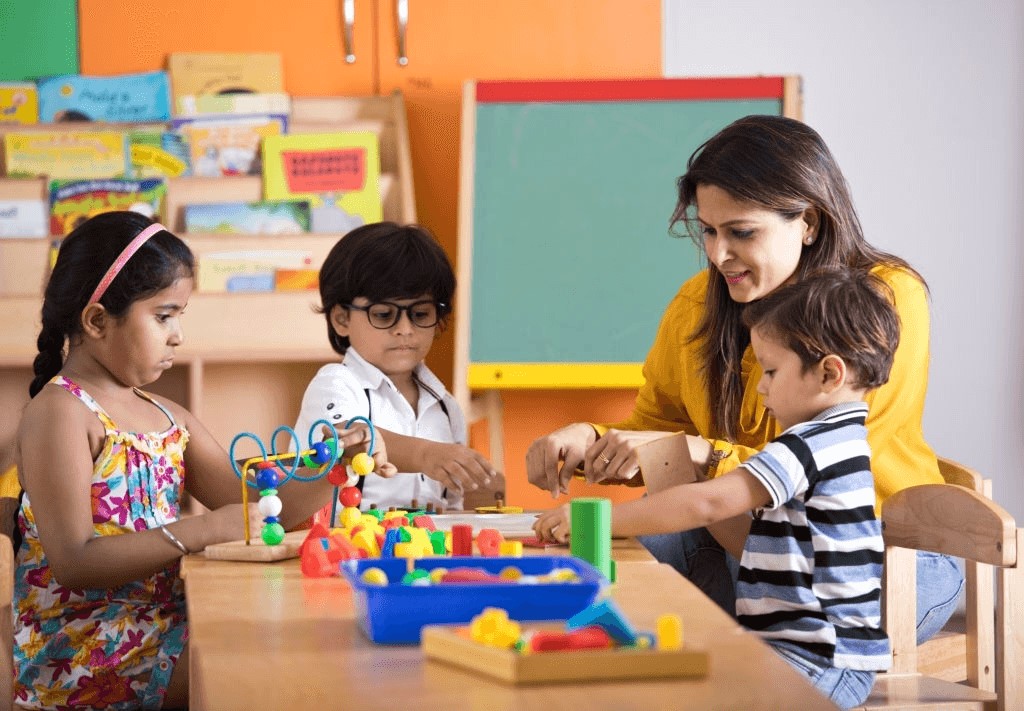
- Free play corners with blocks, pretend play and books
- Circle time for stories, rhymes and discussions
- Outdoor games, music and movement
- Hands-on activities with art, clay, sand and water
- Quiet time for rest or picture books
Instead of early pressure for worksheets, teachers can weave learning into daily life. Counting can happen while sharing snacks. New words can come from role play in a toy market.
Language, thinking and early academics
In India, many children grow up hearing more than one language. A modern preschool values this and builds strong language skills in a natural way. Storytelling, songs, picture talks and show-and-tell sessions all support speaking and listening.
Teachers can gently introduce pre-reading skills like following a line of text or identifying sounds, without forcing children to read early. Early numeracy, too, should come through real experiences: comparing sizes, sorting objects, measuring sand, and recognising patterns. The aim is a love for learning, not competition, at age three.
Physical development and health habits
Holistic growth includes active bodies. Even in tight urban spaces, schools can plan for movement through obstacle paths, yoga, simple exercises and action songs. Fine motor skills grow through threading beads, finger painting and tearing paper.
Preschools also shape health habits. Children can learn to wash hands properly, use the toilet with dignity, keep their tiffin area clean and drink enough water. Small routines followed daily soon become lifelong habits.
Values, inclusion and social skills
Modern classrooms are diverse. Children may come from different languages, religions, family patterns and abilities. A good preschool treats this as a strength. Festivals can be introduced as chances to learn about one another, without forcing any belief. Stories and dolls can show different skin tones, family types and roles.
Teachers can model fairness and respect by:
- Encouraging children to share and take turns
- Helping them use words instead of hitting
- Praising effort, not only results
- Addressing teasing and rough play calmly
When children experience fairness early on, they carry that sense of justice into later years.
Strong partnership with parents
The best preschools see parents as partners, not outsiders. Regular communication through diaries, apps, calls or meetings keeps everyone aligned. Instead of only reporting marks, teachers can share small observations such as “She helped a friend today,” or “He is enjoying puzzles now.”
Many parents choosing a preschool in Chennai say they value schools where teachers are approachable, open to feedback and honest about challenges. When home and school work together, children feel secure and behave better.
How parents can evaluate a preschool
When you visit a preschool, look beyond the brochure. Notice how adults speak to children and to support staff. Check if children’s work is displayed at their eye level. See if toys look well-used, not only arranged for show.
You can also ask a few simple questions:
- How do you help a new child settle in?
- How do you handle biting, pushing or hitting?
- How do you support children who are shy or active?
The answers will show whether the school truly understands young children.
Building a foundation for life
Preschool is not about rushing into academics; it is about shaping a child’s relationship with learning, people and self. A modern preschool that focuses on holistic development creates children who feel safe, curious and capable. When you choose such a school, you are not only thinking about one year of nursery or LKG. You are laying a foundation that will support your child through primary school and beyond.